


Inspiration - "On Yoga: The Architecture of Peace" Film.
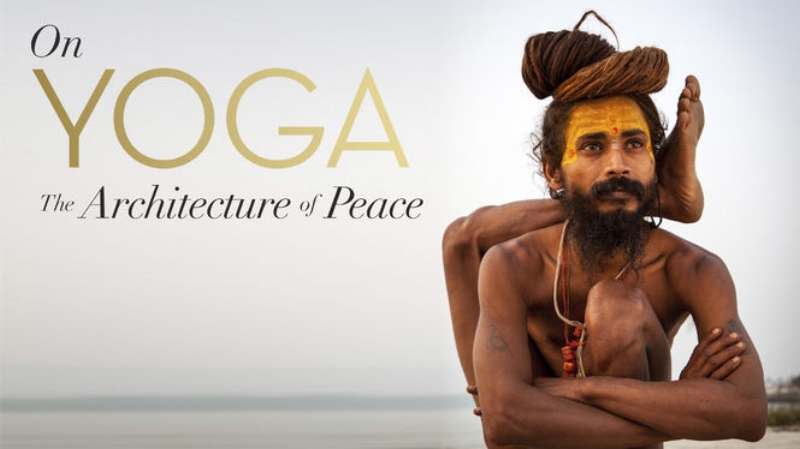
I often spend my free time scouring the internet for ultra inspiring documentaries. As a photographer, I'm in love with storytelling and believe the best images often tell the greatest stories. Over the weekend the film "On Yoga: The Architecture of Peace" was recommended to me by another creative. After watching the trailer, I made it a priority to watch the film before the end of the weekend.
The documentary follows the photographer, Michael O'Neill as he talks to the great Yoga masters in India, Tibet and New York. Through the photographers on personal endeavors, he finds himself turning to yoga to overcome his own battle. This leads him down a road for 10 years creating a photo project. This film wonderfully showcases the parallels between taking a photograph and deep meditation. The images created for this project are extremely inspiring and breathtaking.

This film gives great purpose to the work we often do as creatives. It's a reminder of how fragile and beautiful life can be. However, by taking moments to breathe, you can ensure you are making the most out of every day. You can watch "On Yoga: The Architecture of Peace" on Netflix now!
ALL PHOTOS BY Michael O'Neill.


How To Enhance Portraits Using A Reflector.
In photography, lighting is the single most important tool. As photographers, we constantly chase light and literally cannot survive without it. Both inside and outside of the studio, one of the most important (and often underrated tools) you should have on hand is a reflector. It can be used to diffuse, bounce, or flag natural and artificial light. In this video, Aaron Nace of Phlearn provides tips on the benefits of using reflectors and why this is an especially important tool to have in every photographer's bag.
- Gold Reflector – The gold reflector will bounce a lot of light and give the light a “gold” color. This can be perfect for bouncing light during a sunset, or when you want to add some warmth to a portrait. In our experience, the gold reflector is used less than silver or white.
- Silver Reflector – The silver reflector will bounce a lot of light and keep the light color neutral. This is great when you need more light in a portrait or when your reflector has to be far from your subject. Be careful you don’t blind your subject with light, as the reflection can be quite strong.
- White Reflector – The white reflector will bounce a small amount of light with a neutral color. These reflectors are great because they produce softer light than gold or silver.
- Black Reflector – Black reflectors are used to add “negative fill.” Use the black reflector to reduce the amount of light around your subject. Black reflectors are generally used with portraits on the left and right side of the subject to give them more depth.
- Diffusion – Diffusion panels are meant to diffuse or soften light. Generally, you will shine a light through a diffusion panel and then the light will hit your subject.
These panels will make the light softer and larger, but they will also reduce the amount of light that hits your subject.

Around The Blok. Vol. 5 - Fawn DeViney
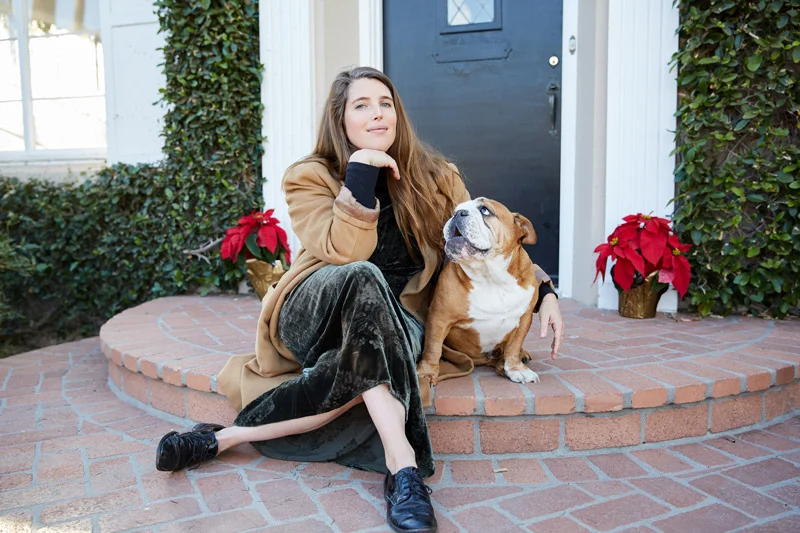
Fawn is a Phoenix-based editorial and fine art photographer by way of Traditional New England. Her aesthetic is influenced by the softness of New England's gray skies and the many hues of the Atlantic Ocean. When she puts her camera down, you can often find her spending time with her beloved pup, Duece! Today, we are extremely thrilled to sit down with Fawn for Around The Blok!
TELL US ABOUT YOURSELF.
I am a photographer who is drawn to calm neutrals and natural light. I used to live with my head in the clouds and would find myself so frustrated with not materializing what I had created in my mind. So now, I have daily rituals to ground myself in simple mindfulness. Creating that space has allowed for me to work in the most honest and organic way possible and my greatest hope is that is seen in my images.

WHY DO YOU DO WHAT YOU DO?
I must photograph. always and always. It is how I communicate. I have never been a verbally driven woman. If I speak too many words it is because I can’t seem to find the right one. But, somehow when I photograph what I’m feeling it is as though I can let out a sigh of relief, “Oh, there it is. That is what I meant to say.” It is my language.

WHAT BENEFIT DOES ART PROVIDE TO SOCIETY?
Artists hold an incredible responsibility of truth and vulnerability. We are sharing a part of our souls with the masses and to me that is incredibly powerful. But, more than that how certain pieces resonate with complete strangers. You become connected with your viewer on a deep level owing to the fact that they found something in their own soul because of what you created from yours.

WHAT’S YOUR ADVICE TO OTHERS CHASING THEIR DREAMS?
Know that you can really do it. When you are in flow with the root of who you are nothing can stand in your way.

WHAT IS YOUR BIGGEST INSPIRATION AND WHY?
Solitude and the water is my great source of inspiration. It could be the ocean, rain, a lap pool, or the bath. It is my time to reconnect with my intuition. It won’t be long after I submerge myself that ideas that have been living my in mind materialize. I also typically end the day with a bath, a glass of wine, and journaling near the fireplace. It’s impossible to not be overwhelmed with gratitude and that in of itself is incredibly inspiring.
WHEN YOU THINK OF HOME, WHAT COMES TO MIND?
My current home in downtown Phoenix. It is truly a manifestation of my wildest dreams. When you walk in my home it is an extension of myself and I could not feel more at peace and calm than when I am there.

Four Things to Consider When Building Your Light Setup

Mood
Light direction, quality, and color help shape the story and create the mood of your images. Having a solid understanding of the concept and mood of your shoot will help you make better decisions on which light modifiers to use. For example, if the concept calls for soft lighting, then you would know to consider a softbox and if it's hard lighting then maybe a beauty dish or reflector would be a better choice for the job.
Ambient Light
The proper balance of ambient and artificial light can make a beautiful portrait. When shooting on-location, it's essential to have a good balance between the two. Camera shutter speed controls ambient light, a slower speed allows for more ambient, and a faster speed deduces it. It primarily depends on the concept and mood you want to portray.
Lighting Style
Wheather you're using strobes to photograph people, products or places, there will always be a lighting style that is more flattering based on the characteristics of the subject. For example, broad lighting can be used to make narrow faces look fuller and short lighting is ideal for slimming the face out. Having a good understanding of the various lighting styles and knowing when to use them is vital to taking quality portraits.
Fill Light
Fill light can be used to brighten up shadows and make an image more interesting. If the shadows are too dark, try adding white foam core or a soft modified light source to the shadow side of the face to brighten them up. A white/silver reflector or soft modified light can also add beautiful catchlights in your subject's eyes, making a more interesting photo.
Join us in our LIGHTING 101 class to learn more about these concepts.
Three Lighting Kits To Consider.
Purchasing a lighting kit can be a daunting task, especially for your first kit ever. Many photographers have to consider the type of work and typical shooting scenarios that the kit would work best for. The overall cost for a lighting kit can be very expensive, but you can definitely find alternatives.
Photographer and director, Joey L gives an in-depth review of three lighting kits that can be used in the studio or on location. The review covers the brands Paul C. Buff, Profoto, and Broncolor. He also goes over the essential items in each kit.
This review is a great starting point for anyone looking to purchase or upgrade a current kit. Our Lighting 101 Class covers this topic in-depth. If you're interested in learning more go sign up!

Studio Lighting Gear Essentials

Learning to use studio strobes or any off-camera flash can be an overwhelming job. Understanding what type of gear is required can be just as confusing. If you're new to shooting with off-camera flash, we always recommend keeping things simple. In this article, we cover the essential tools you'll need to get started!
CAMERA AND LENS
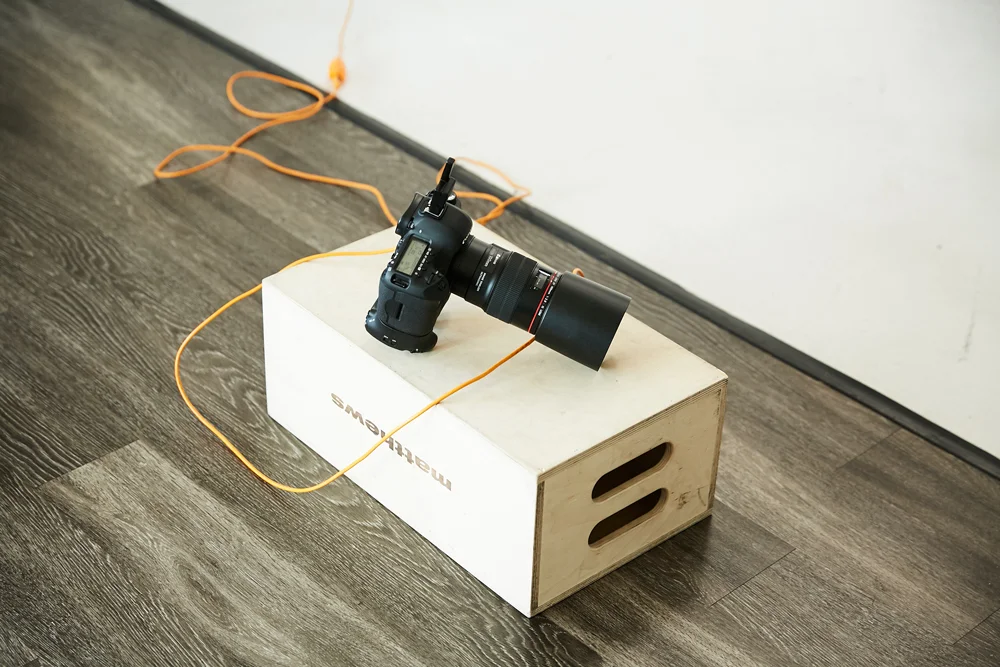
We'll start with the bare minimum tools you'll need which are a camera and lens. Without these items, you won't get far on this journey. There are many different brands available, but the most critical feature your camera will need to have is manual mode. This option allows you to manually control the ISO, Aperture and Shutter Speed of your camera. Manual mode is typically a standard feature for most DSLR and mirrorless cameras. For the lens, we suggest a standard zoom lens as it provides excellent versatility in the studio. Your lens preference will undoubtedly change as your knowledge grows.
LIGHTING AND MODIFIERS
An off-camera light source such as a studio strobe or speed light is required to learn the technical aspects of studio lighting. A speed light is a portable flash that can be fired on the hot shoe of your camera or wirelessly, with the proper triggers. They tend to be less expensive than studio strobes and more portable. Studio strobes are larger and powered by AC power. They have to be plugged into the wall or a battery pack. They tend to be more powerful than speed lights. We use strobes here at Blok Studio, but either type will be sufficient to learn with. A light modifier isn't required but helps shape the light. If you're unfamiliar with light modifiers, you can read our previous post about it here.

LIGHT STANDS
Light stands are one of the most ignored studio elements, but with the proper stand, you will become more efficient when setting up your off-camera flash. Stand types vary from general purpose to c-stand, boom stand, rolling stand, and the list goes on. C-stands provide great flexibility and last a long time because they're built like a tank but aren't the most portable stands. If you're just starting out and on a budget, then a general purpose light stand will work just as well.
TRIGGERS
Wireless and wired are the two methods to trigger your off-camera flash. A transmitter (connects to camera's hot shoe) and receiver (connects to studio strobe or speed light) are both needed to fire your flash wirelessly so regardless of the brand, be sure you have those. If you're triggering your flash with the wired method, then a sync cable specific to your camera brand is required.
Our lighting 101 class covers this topic more in-depth. If you're interested in learning more go sign up!

Around The Blok. Vol. 4 - Elliott Clark
Elliott is a Phoenix-based photographer, content creator, and social media consultant, and known to many as the Apartment Bartender. His website provides a plethora of cocktail recipes that anyone can enjoy and made simple for those taking their personal bar cart to the next level. Today, we are extremely thrilled to sit down with Elliott for Around The Blok!

1. Tell us about yourself?
I’m Elliott. Chicago born and Arizona raised. I was named after E.T. Fun and outgoing with the right amount of weird. I’m equal parts photographer and home bartender/cocktail enthusiast. I’m at my best when I’m in good company. Food and drink is a big part of my life, as I run a blog dedicated to home bartending how to’s, drink recipes, and the life that goes with it.
2. Why do you do what you do?
I do what I do because I love it. I don’t try to overcomplicate it. As far as what drives me is the need to continue getting better and better. It’s easy for me to get to a point where I feel stagnant, and I hate feeling like I’m not learning or growing or challenging myself in new ways.

3. What benefit does art provide to society?
Art is life.
4. What’s your advice to others chasing their dreams?
I’m a big believer in pursuing what matters most to you, and what makes a difference in the lives of others. If there’s a dream you have that you want to pursue, then pursue it. If it’s not realistic to chase it immediately, then figure out what you have to do to make that dream a reality and do it. It’s cliche but it’s true. When I left my full-time sales job to run Apt. Bartender, I realized there was no magic secret. Taking action is the secret.

5. What is your biggest inspiration and why?
My biggest inspiration comes from traveling. I meet a lot of people, all with unique backgrounds and it’s inspiring to see where people come from and see the cool things they’re doing in their own lives. Hard not to get motivation from that.

6. When you think of home, what comes to mind?
I believe wherever you lay your head can be home. I grew up traveling from an early age, so I don’t view home as a singular place. As long as I have good people around, then wherever I am I see as home.


Capture One 11 Is Now Here!
Here at Blok Studio, we are firm believers in shooting tethered. We wrote an article about the benefits of tethering that you can find HERE. Outside of having the proper hardware to tether, it's equally important to have the software for your raw capture and that's where this Capture One comes into your workflow. There are definitely other options for tethering such as Lightroom, but here at Blok, we use Capture One exclusively. Recently, Phase One did an overhaul on their latest version to really push this powerful software to new heights. The video included gives a great overview of the new features so you can take full advantage of this tool.

Intro to Studio Lighting

One of the main benefits Blok Studio offers is its incredible amount of natural light. That along with the minimal design and ease of use of the studio is typically the primary reasons people choose to create here. Use it as a blank canvas to build upon or keep it minimal and subject focused. When natural light isn't enough, we provide studio lighting to help take your vision further.
Understanding and proper use of studio lighting can bring a great deal of value to you as a photographer and empowers you to create exceptional work no matter the lighting conditions. It can seem like an intimidating skill to learn but starting with one light and mastering the fundamentals of that gives a great foundation to learning more complicated setups. In this post, we provide tips on how to correctly light a subject with just one light.
Light source
Consider the lighting style and mood you want to achieve when determining the light source, as difference modifiers are used to accomplish different looks. Large, diffused light sources like an octa or softbox and umbrella with diffusion panel are excellent for producing soft light. Modifiers such as a beauty dish, silver umbrella or even the bare light head are great for creating hard light. In the example, we use a 5-foot umbrella with a diffusion panel for a nice soft look.

Light Placement
Distance will dictate the characteristics of the light, and the angle will determine where the shadows fall. The closer the light source is to your subject the softer the light, the further the source, the harder the light. Reading about the inverse square law will provide more technical insight into this. Don't be afraid to experiment with different lighting distances and angels. It's a great way to get a better understanding of how light falls on your subject and taking good notes of the setup helps also. In the example, the light source was placed camera right, about 45 degrees and 4 feet away from the subject. Also notice how the light is falling onto the subject.

camera Settings
Having correct exposure is vital when shooting with studio strobes, so camera settings are just as important as the other areas we've covered. A good starting point would be ISO 100, shutter speed 1/125 or whatever your camera's shutter sync speed. At this point, you can you can experiment with the aperture and power setting on the flash head to find the desired lighting style. In our examples, the studio strobe was set at 1/4 power; our camera settings were F8, 1/125 and ISO 100.

If you're interested in learning more about lighting in the studio, go sign up for our LIGHTING 101 class. This class is excellent for the beginner or intermediate photographer who is looking to add studio lighting to their skillset!

Learn how to be a director with Thomas Ingersoll.
This week our Blok EDU instructor, Thomas Ingersoll, gives some vital information on how to make sure you're an effective director! His post takes you on a step-by-step process from meeting the client(s), to delivering the final images. You can check the entire post HERE!
